


Today’s marketplace has become quite competitive, businesses are always on the lookout for cost-effective ways to grow. One of the most powerful yet often overlooked strategies? Running both referral and affiliate programs.
Imagine tapping into the networks of both your loyal customers and professional influencers. Personal recommendations from satisfied customers build trust, while skilled affiliates can expand your reach to entirely new audiences.
The result?
Lower customer acquisition costs and a broader, more engaged customer base.
By combining these two strategies, businesses not only grow their audience but also build loyalty and drive high-quality conversions. It’s like having the best of both worlds, a personal touch from referrals and the expertise of professional affiliates.
In this blog, we will cover:
- The key differences between affiliate and referral marketing.
- Why running both programs can transform your marketing strategy.
- Real-world examples of businesses leveraging both programs.
- How tools like Referral Rocket can help you scale these efforts efficiently.
Let’s discuss,
Understanding Affiliate Marketing and Referral Marketing
Before diving into why running both programs is a smart business move, let’s first understand the basics of affiliate marketing and referral marketing, two powerful yet distinct strategies.
What is Affiliate Marketing?
Affiliate Marketing works by leveraging third-party marketers, influencers, or bloggers who promote a company’s products or services. These affiliates earn a commission for each successful sale or lead they generate.
Think of affiliates as an external salesforce that markets your product to a broader audience, similar to how a commission-based salesperson operates, but in the digital space. The more they promote and convert, the more they earn, creating a win-win scenario.
What is Referral Marketing?
Referral Marketing taps into your existing customers and their personal networks.
It’s simple,
your customers recommend your product to friends or family, and when those referrals convert into paying customers, the referrer is rewarded. The reward might be discounts, freebies, or credits.
Unlike affiliate marketing, referrals are built on trust and personal recommendations. It’s like having your happiest customers do the marketing for you.
Both strategies are powerful, but they work in different ways.
Affiliates bring in new audiences, while referrals come from personal, trusted recommendations.
Now that you understand the fundamentals, let’s explore why running both affiliate and referral programs can transform your business growth.
Why You Should Run Both Referral and Affiliate Programs ?
It’s easy to see why many people confuse referral marketing with affiliate marketing. After all, both strategies involve someone promoting your business to others in exchange for a reward. But while they may seem similar on the surface, these two marketing strategies have distinct goals and approaches—and running both can be a game-changer for your business.
Addressing the Confusion,
Many business owners and marketers think they have to choose between affiliate and referral programs. But the truth is, they serve different purposes and target different audiences. One focuses on professional marketers looking to earn commissions, while the other leverages the trust of personal networks.
Still not sure which is which? Let’s break it down.
Key Differences Between Affiliate and Referral Programs
| Affiliate Programs | Referral Programs |
| Who Promotes? Professional marketers, influencers, bloggers | Who Promotes? Existing customers, personal networks |
| Incentive Type: Monetary rewards (commissions) | Incentive Type: Discounts, store credits, freebies |
| Target Audience: New, broader audiences | Target Audience: Friends, family, and trusted contacts |
| Relationship: Business-oriented, profit-driven | Relationship: Trust-based, personal recommendations |
| Marketing Goal: Increase exposure and sales | Marketing Goal: Build loyalty, trust, and organic growth |
Click here for an in-depth comparison of affiliate vs. referral marketing.
Both strategies are highly effective, but they tap into different dynamics. Affiliate marketing is perfect for reaching new markets, as affiliates already have built-in audiences that they can promote your product to. Referral marketing, on the other hand, is about leveraging your existing customer base—people who already trust you—to bring in high-converting leads from their personal networks.
So, why should you run both referral and affiliate programs ?
Because when used together, they amplify each other’s strengths and cover gaps that either strategy might miss on its own. Here’s how:
Broader Reach:
Affiliates can promote your product to entirely new audiences, opening up markets you wouldn’t have been able to access otherwise.
Meanwhile, referrals create high-trust connections, leading to faster conversions.
Lower Customer Acquisition Costs:
Both programs are performance-based, meaning you only pay for successful conversions. Affiliates are paid based on results, while referrers are rewarded only when their recommendations turn into sales.
Increased Customer Loyalty and Retention:
Referral programs incentivize customer loyalty by rewarding them for bringing in new customers. This creates a loop of engagement, as satisfied customers keep coming back, knowing they’re helping their friends benefit too.
Scalability Without Increasing Costs:
With the right tools like Referral Rocket, you can easily scale both programs without significant increases in cost. The system does the heavy lifting by tracking conversions and automating rewards.
In short, running both programs allows you to capture new customers through affiliates while deepening customer relationships through referrals. It’s like planting seeds in two different fields, one for new growth and one to nurture the growth you already have.
Now that you understand why this approach is so effective, let’s dive into some real-world examples of companies successfully running both referral and affiliate programs.
Real-World Examples of Businesses Running Both Programs
Let’s dive into two businesses that have successfully implemented both referral and affiliate programs, Grammarly and Revolut. We’ll explore the specific mechanics of each program and how these companies have leveraged them for growth.
1. Grammarly
Referral Program:
Grammarly’s referral program is simple yet effective. Existing users are rewarded with one free month of Grammarly Premium for each successful referral. The person being referred also benefits—they get to try out Grammarly for free. Users can keep earning these premium months for every friend they refer, making it a win-win for both sides.
This creates a trust-driven system where satisfied customers are motivated to share Grammarly with friends who need writing assistance. The personal connection makes the referral feel more genuine, resulting in higher conversion rates.

Program Specifics:
- Reward: One free month of Grammarly Premium for each referral.
- Audience: Existing users referring to their personal network.
- Incentive Structure: Simple, tiered rewards based on the number of referrals.
Affiliate Program:
Grammarly’s affiliate program targets bloggers, influencers, and content creators who promote the platform to their audience. Affiliates earn a commission for each premium sign-up generated through their unique affiliate links.
This commission-based structure encourages affiliates to actively promote Grammarly on websites, blogs, and social media platforms. Grammarly provides affiliates with marketing materials, such as banners and custom links, to help drive conversions.

Program Specifics:
- Commission: Affiliates are paid for every premium sign-up.
- Audience: Professional marketers, influencers, and bloggers.
- Tools Provided: Custom banners, links, and marketing resources to drive traffic.
Impact:
Combining these two programs, Grammarly expands its reach through professional marketers while also leveraging the trust that comes from personal referrals. This strategy helps Grammarly reduce customer acquisition costs while encouraging loyalty among existing users.
2. Revolut
Referral Program:
Revolut’s referral program is built around cash rewards. Existing users can refer their friends and, once the referred friend completes certain actions (like making a deposit or ordering a card), both parties receive a cash bonus.

This monetary incentive makes the referral attractive to users, ensuring more referrals. What makes this program unique is that it’s action-based—both the referrer and the referee must complete specific actions to unlock the reward, driving deeper engagement with the platform.
Program Specifics:
- Reward: Cash bonus for both referrer and referee upon completion of certain actions.
- Action Requirement: Referrals must order a card or make a deposit for rewards to be triggered.
- Audience: Existing users referring to friends or family.
Affiliate Program:
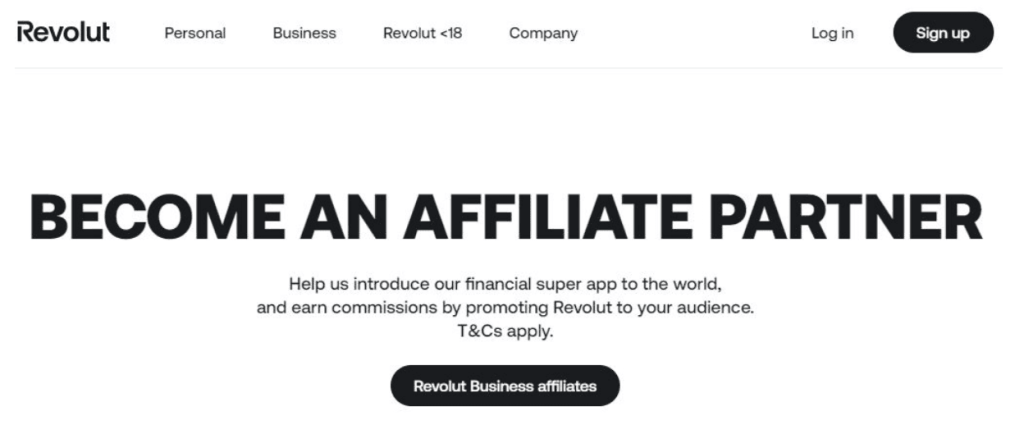
Revolut’s affiliate program is aimed at bloggers, influencers, and websites looking to monetize their traffic by promoting Revolut. Affiliates earn commissions for each new user they bring in, similar to other affiliate programs.
What makes Revolut stand out is its focus on global expansion—affiliates can promote Revolut to international audiences, with support for tracking and managing commissions globally.
Program Specifics:
- Commission: Affiliates earn commissions for new user sign-ups.
- Audience: Bloggers, influencers, and marketing partners.
- Global Reach: Affiliate commissions can be earned from users across multiple countries.
Impact:
By offering cash incentives through referrals and commissions through affiliates, Revolut reaches a global audience while driving engagement from existing users. This dual approach helps Revolut grow efficiently while keeping its marketing spend performance-driven.
Both Grammarly and Revolut have created powerful growth engines by running both referral and affiliate programs. While referral programs build trust and loyalty by engaging existing users, affiliate programs leverage professional marketers to tap into new markets.
By combining these approaches, businesses can lower their customer acquisition costs and scale efficiently.
How Referral Rocket Can Help You Scale and Manage Both Programs ?
Running both referral and affiliate programs might sound like a great idea, but managing them efficiently? That’s where the challenge lies. With Referral Rocket, you can simplify the entire process and scale without the headache.
First off,
1. Referral Rocket offers automated tracking,
Allowing you to easily follow referrals and affiliate conversions in real-time. No more guessing who referred whom or whether an affiliate earned their commission. It’s all right there, accurate and efficient.
Worried about different rewards for different programs?
2. Referral Rocket’s customizable reward structures
Let you tailor incentives—whether it’s store credits, cash commissions, or discounts. You get the flexibility to reward each participant according to what drives them.
3. Referral Rocket makes scaling a breeze,
As your business grows, so do your programs. Whether you have 10 or 1,000 participants, the platform handles it all seamlessly—without the complexity.
4. Finally, data-driven insights,
Allow you to see what’s working and what’s not. With powerful analytics, you can identify your top referrers and affiliates and double down on what’s driving results.
Things to Keep in Mind When Running Both Programs
As we’ve already touched on, the confusion between referral and affiliate programs can affect not just your business but your customers as well. It’s crucial to address this from the start so that both your marketing efforts and the participant experience remain smooth. Here are a few things to consider when running both programs.
Clarity in Messaging
To avoid confusion, make sure the difference between your referral and affiliate programs is crystal clear. Use distinct language to explain who each program is for, what they offer, and how participants can benefit.
For instance, your affiliate program should be geared toward influencers and marketers looking to earn commissions, while your referral program should focus on existing customers recommending your product to friends and family.
Separate landing pages for each program can make this distinction even more apparent.
Tailored Incentives
Keep in mind that not all participants are motivated by the same rewards.
Affiliates are generally driven by commissions or monetary incentives, whereas customers in a referral program are more likely to respond to discounts, store credits, or free products.
Tailoring your incentives to match these motivations ensures higher participation and better results.
Targeting the Right Audiences
Referral programs work best when targeted toward existing customers, people who already know and trust your product. Meanwhile, affiliate programs are designed to reach new, untapped markets through professional marketers and influencers.
By focusing each program on the right audience, you can maximize the effectiveness of both strategies.
Tracking and Attribution
It’s essential to have the right tools in place for tracking referrals and affiliate conversions. Using platforms like Referral Rocket helps ensure that every action is tracked accurately, and rewards are distributed to the right participants.
This level of precision reduces errors and keeps both programs running smoothly.
Compliance and Legalities
Lastly, remember that both affiliate and referral marketing have their own sets of rules and regulations, particularly around disclosures and data privacy.
Affiliates need to clearly disclose their relationship with your business, and both programs should comply with GDPR or other relevant regulations to protect customer data.
By keeping these key factors in mind, you can ensure that running both referral and affiliate programs works harmoniously for your business
To Sum It Up !
Running both referral and affiliate programs together is a powerful way to fuel business growth. By tapping into trusted personal recommendations through referral programs and the broader reach of affiliate marketing, businesses can optimize customer acquisition while keeping costs low and manageable.
In an increasingly competitive marketplace, cost-effective and scalable strategies are essential. Combining these two programs, with the right tools like Referral Rocket, can help businesses build loyal customer bases and achieve sustainable growth.
Ready to take your referral and affiliate marketing to the next level?
Discover how Referral Rocket can help you efficiently scale both programs and grow your business with ease.