


There’s a common myth that referral marketing is just a by-the-way strategy for acquiring new customers—a nice-to-have rather than a must-have. However, this couldn’t be further from the truth. In today’s competitive marketplace, referral marketing is not only effective but essential for sustainable business growth. It leverages the most traditional form of trust-building: word-of-mouth, transforming satisfied customers into powerful advocates for your brand.
In this blog, we’re going to explain what a good referral rate looks like and how you can improve it for your business. We’ll cover why referral rates are important for tracking the success of your referral marketing efforts and share detailed steps on how to make these rates better. From knowing the usual rates in your industry to using advanced methods to make your referral program work better, this guide has useful tips and practical advice to help boost your business’s referral rate.
Section 1: Understanding Referral Rates
1.1: Definition of Referral Rate
A referral rate is a crucial Key Performance Indicator (KPI) in referral marketing. It measures the efficiency at which your customers are converting their friends and family into new customers. Mathematically, it’s calculated as follows:
Referral Rate = ( Number of Customers Who Refer / Total Number of Customers ) × 100%

This percentage tells you how effectively your customer base is helping to grow your business by advocating for your brand.
1.2: Industry Benchmarks for Referral Rates
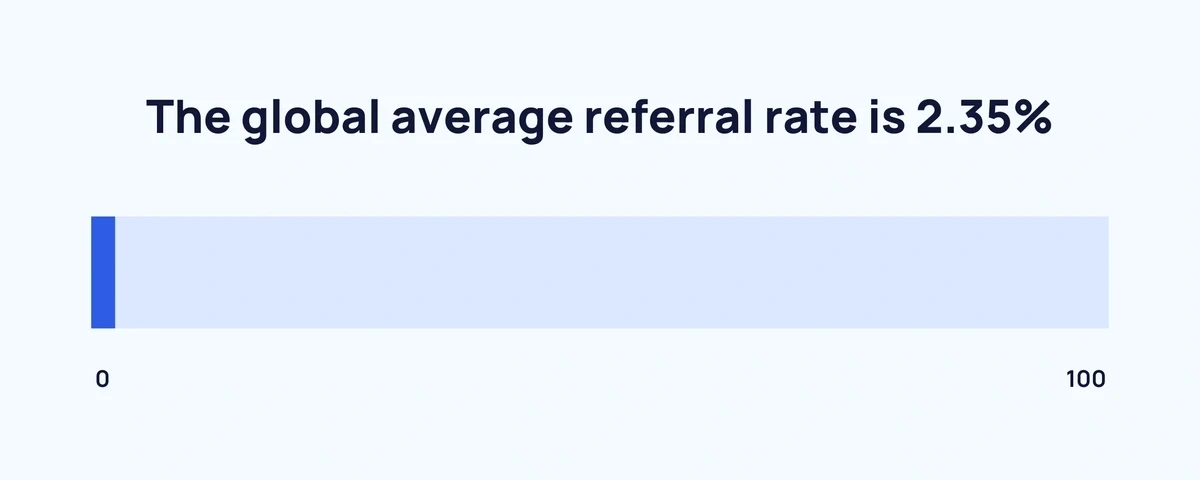
Globally the average referral rate across various industries is about 2.35%. This rate can serve as a general benchmark when comparing the performance of specific referral programs.
Understanding the average referral rates across different industries provides valuable context for assessing your program’s performance. For instance:
- E-commerce and Retail: For these sectors, a referral rate between 2% to 5% is often seen as healthy. Consumers are more likely to share products they like with their friends and family, especially if incentivized properly.
- Subscription Services: Companies like software as a service (SaaS) or subscription boxes might aim for higher referral rates, around 5% to 10%, due to the ongoing relationship nature of the business and recurring revenue model.
- High-Involvement Products and Services: For industries where purchases are less frequent and involve more consideration (like automotive, real estate, or luxury goods), referral rates might be lower, but the value of each referral can be significantly higher.
Having realistic goals based on these benchmarks allows you to better understand and improve your referral program’s effectiveness.
1.3: Factors Influencing Referral Rates
Several factors can impact your referral rate, making it crucial to understand and optimize these areas :
- Customer Satisfaction: Highly satisfied customers are more likely to refer others.
- Incentive Structure: Effective rewards motivate customers to make referrals.
- Ease of Referral Process: Simpler processes encourage more frequent referrals.
- Brand Loyalty: Strong emotional connections with the brand can boost referral activities.
- Communication: Regular and clear communication about the benefits and procedures of the referral program can increase participation.
Each of these elements plays a significant role in determining the success of your referral efforts. That’s why it becomes important focusing on these areas, for you to strategically enhance your business referral rates and overall marketing success.
Evaluating ROI
Ultimately, the profitability and success of a referral program are measured by the return on investment (ROI). This involves not just looking at the referral rate but also considering the cost of the incentives, the administrative costs of running the program, and the revenue generated by new customers acquired through referrals.
To determine a healthy referral rate for your business:
- Set Clear Objectives: Define what success looks like for your referral program.
- Measure and Adjust: Continuously monitor the performance of your referral program and adjust your strategies, incentives, and support systems to improve engagement.
- Compare Across Channels: Evaluate how the referral channel performs in comparison to other marketing strategies in terms of cost, effectiveness, and customer quality.
Referral rates can be optimized over time by refining the program based on these metrics and industry benchmarks. This adaptive approach helps ensure that the referral program remains aligned with broader business objectives and market conditions.
Section 2: Analyzing Good Referral Rates
Subsection 2.1: What Constitutes a Good Referral Rate?
Understanding what makes a good referral rate is crucial for any business using referral marketing. A “good” referral rate can vary a lot depending on the industry because different types of businesses interact with their customers in different ways.
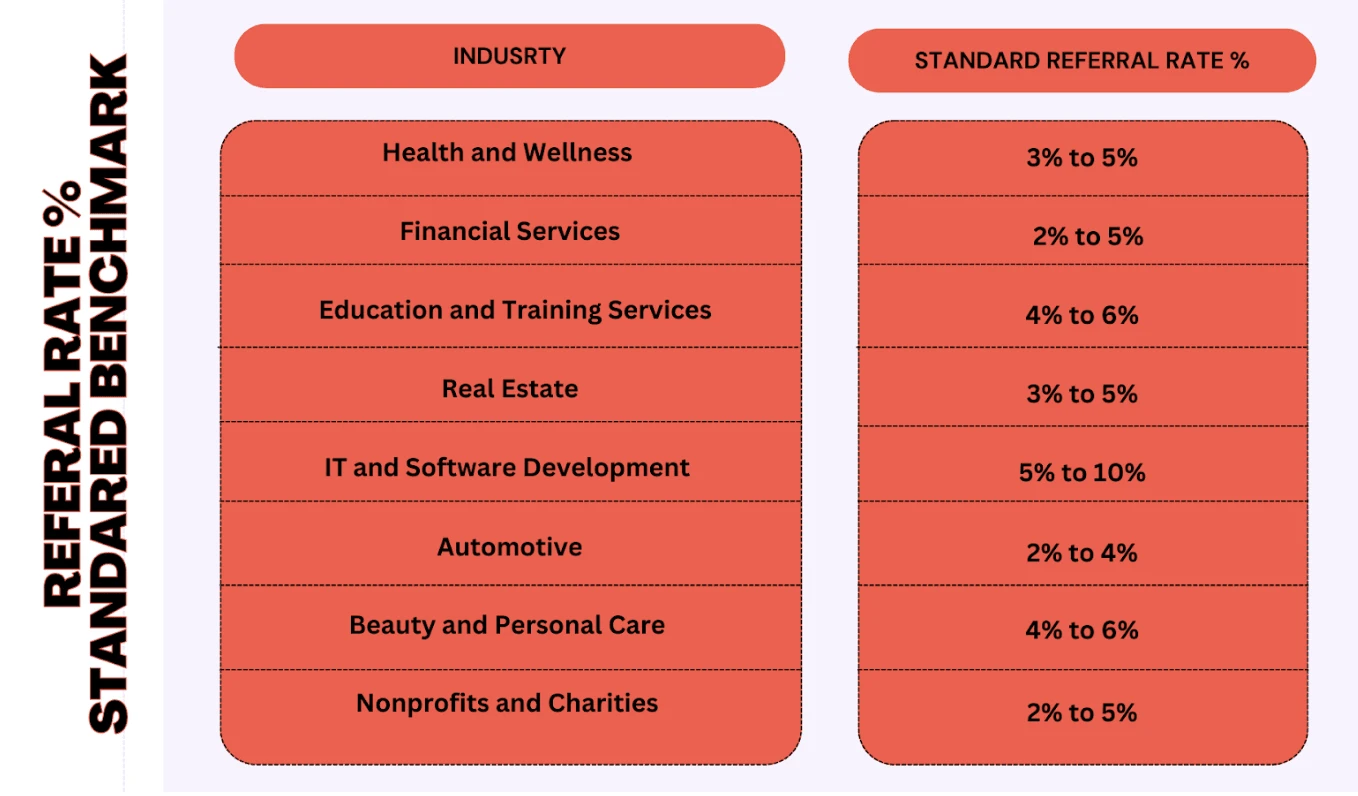
There are specific referral rate benchmarks for various other industries that find referral marketing particularly effective:
Health and Wellness
Businesses like gyms and spas typically see a referral rate of 3% to 5%. The personal benefits customers get from these services make them more likely to share their experiences.
Financial Services
For banks and insurance companies, a healthy referral rate ranges from 2% to 5%. Trust is very important here, which makes referrals valuable.
Education and Training Services
Schools and training programs often have a referral rate of 4% to 6% because the impact of their services can be significant and long-lasting.
Real Estate
Real estate agencies aim for a referral rate of 3% to 5%. Since buying property is a major decision, each referral is very important.
IT and Software Development
Tech companies, especially those offering customized solutions, often target a referral rate of 5% to 10%. Innovative products and high customer satisfaction drive these high rates.
Automotive
Car dealerships and repair shops generally see referral rates of 2% to 4%. Large investments in vehicles encourage strong customer relationships, which are good for referrals.
Beauty and Personal Care
For beauty salons and skin care clinics, referral rates often range from 4% to 6%. Visible improvements in appearance encourage customers to share their positive experiences.
Nonprofits and Charities
Nonprofit organizations might see referral rates from 2% to 5%. The emotional ties to their causes motivate supporters to bring others on board.
Knowing these benchmarks helps you set realistic goals for your own referral program, tailored to your industry and specific business dynamics.
2.2: Importance of Measuring and Tracking Referral Rates
Even after achieving a good referral rate it is essential to keep track of your referral rate because it helps you understand how well your referral program is working and how you can make it even better. Here are a few methods and tools that make this easier:
Analytics and Reporting Tools:
Use software like Google Analytics to see how many new customers are coming from referrals and how these referrals affect your sales. This kind of tool can track visits to your website and sales that happen because of referral links.
Referral Program Software:
Software like Referral Rocket are designed to help you manage your referral programs automatically. These tools provide detailed information about how customers behave, where your referrals are coming from, and how often they lead to actual sales. This data helps you make changes on the fly to improve your program.
Customer Surveys and Feedback:
It’s also a good idea to regularly ask your customers what they think about your referral program and what would make them more likely to use it. Their responses can give you valuable insights into how to make your program more appealing.
Using these tools to monitor your referral program helps you understand what’s working and what isn’t. For instance, if lots of referrals are made but few result in sales, your rewards might not be appealing enough. On the other hand, if your referrals often lead to sales, it means your customers are really engaged, and investing more into your referral program could be very beneficial.
By carefully analyzing what a good referral rate looks like and continuously checking the effectiveness of your program, you can fine-tune your strategies to not just meet but exceed your marketing goals. This careful monitoring, combined with the right tools and approaches, ensures that your referral marketing efforts are successful, driving growth and building customer loyalty in a way that you can measure and see.
Section 3: Strategies to Improve Your Business’s Referral Rate

3.1: Leveraging Email Marketing to Boost Referral Engagement
Targeted Campaigns
Engaging your customer base through regular emails is a powerful way to keep them informed about the benefits of your referral program. Sending out well-crafted messages that highlight how referrals can benefit both the sender and the receiver helps maintain high levels of participation. Regular communication keeps your program relevant, reminding customers of the rewards they can earn through successful referrals.
Below, we have an example of a few referral email template that can be sent to your customers.
Example 1:
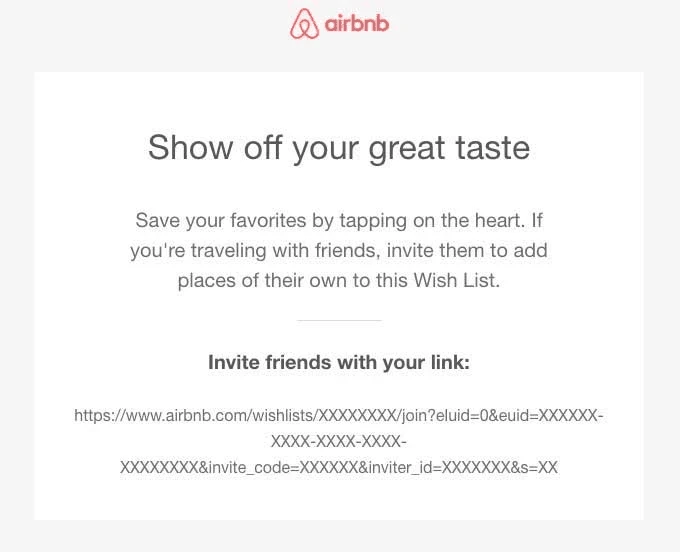
Example 2:

Here are some tips to help you craft referral emails that convert:
- Personalize Your Message: Start by addressing your recipients by name and tailor the content to their interests and preferences. A personalized touch goes a long way in grabbing their attention and building rapport.
- Highlight the Benefits: Clearly outline the benefits of your referral program, including any rewards or incentives. Make it crystal clear what’s in it for them and why they should take action.
- Keep it Simple: Keep your email concise and to the point. Avoid overwhelming your readers with too much information. Focus on the key highlights of your referral program and make it easy for them to understand and take action.
- Use Compelling CTAs: Your call-to-action (CTA) is the most important part of your email. Use persuasive language and compelling visuals to encourage recipients to click on your referral link and take the next step.
- Follow Up: Don’t forget to follow up with gentle reminders to those who haven’t taken action yet. A friendly nudge can often be the push they need to get started.
Segmentation
Using customer data to segment your email list allows you to tailor messages according to different customer behaviors and preferences. This personalization makes your emails more relevant and effective, potentially increasing the engagement rates of your campaigns. For example, customers who frequently use discounts might respond better to emails highlighting monetary rewards for referrals, while those who value exclusivity might prefer messages about special access or limited offers.
3.2: Enhancing Referral Rewards
Tiered Incentives
Introducing a tiered incentive system can significantly boost your referral rates. This system rewards customers more substantially as they refer more people. Such structures motivate customers to continue referring, knowing that their rewards will increase with each successful referral. This approach not only boosts the number of referrals but also fosters greater loyalty to your brand.
Additionally, incorporating milestones referral within these tiers can further enhance motivation. For instance, after five successful referrals, a customer could receive a special status that offers them exclusive benefits, or after ten referrals, they might earn a VIP service experience. These milestones create exciting goals that keep participants engaged over time.
Variety of Rewards
Offering a variety of rewards can appeal to a broader audience. Some customers may prefer direct cash incentives, others might like discounts or coupons, and some might value exclusive access to new products or services.
For example:
- SaaS: Customers might receive a 1-month free subscription for each successful referral.
- E-commerce: Shoppers could enjoy a 10% discount off their next purchase for every friend they bring in.
- Milestone-based rewards: Once a customer reaches a certain number of referrals, they could receive a special gift card or branded swag as a thank you.
By diversifying the rewards, you can cater to different preferences, making your referral program attractive to a wider customer base. This customization ensures that every customer can find a reward that motivates them, whether they are looking for immediate discounts or exclusive long-term benefits.
3.3: Maximizing Visibility on Digital Platforms
Prominent Placement
Ensuring that your referral program is easy to find is crucial for its success. Place it prominently on your website’s homepage or main navigation menu of your app. This visibility makes it easier for customers to participate without having to search for how to refer friends.
See why referral program placement is important.
Example 1:
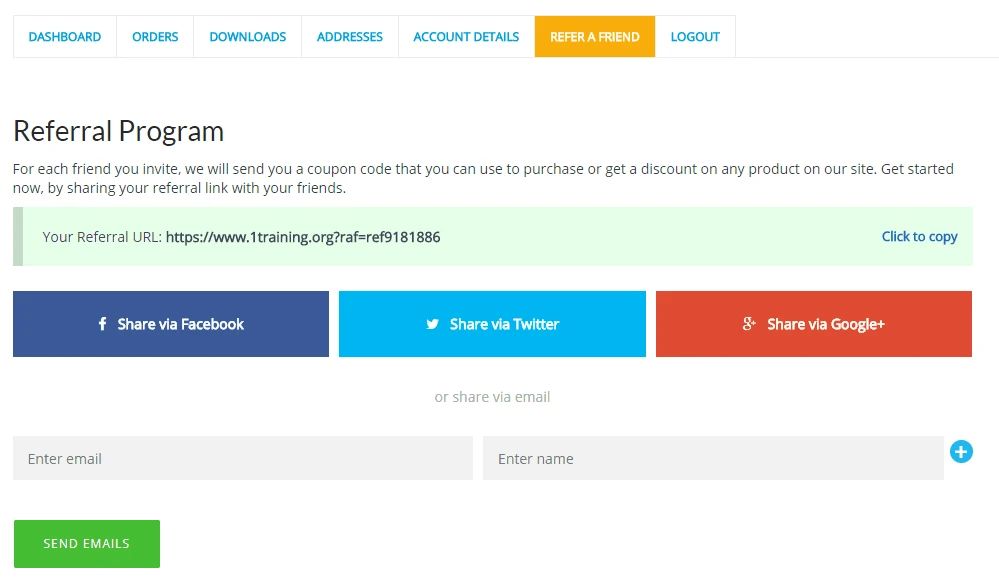
Example 2:

Interactive Elements
Using interactive elements like pop-ups or banners that appear when customers visit your site or app can effectively explain the referral program. These elements can catch the eye and provide essential information at a glance, helping increase the number of participants.
3.4: Utilizing Reminders to Encourage Participation
Timely Reminders
Sending reminders through email or app notifications, especially following a positive interaction with a customer, keeps the referral program at the forefront of their mind. This strategy is especially effective after a customer has made a purchase or availed a service, as their satisfaction level is typically high and they are more likely to recommend your business.
Re-engagement
For customers who have been inactive or have not used the referral program in a while, crafting specific re-engagement strategies can reactivate their interest. Offering special deals or limited-time offers exclusively through the referral program can motivate them to participate again.
3.5: Employing A/B Testing to Refine the Program
Optimize Campaigns
Regular A/B testing of different elements of your referral program can help you understand what works best. Whether it’s testing various types of emails, different rewards, or multiple ways of displaying the referral program on your site, these tests can provide valuable insights.
Measure and Adapt
Use the data gathered from A/B testing to make informed decisions that can enhance the effectiveness of your referral program. Adapting your strategies based on solid performance metrics allows you to continually improve the program’s efficiency and effectiveness.
By implementing these strategies, businesses can significantly enhance their referral rates, turning satisfied customers into active promoters of their brand.
Additional Strategies to Enhance Your Referral Program
Here are some additional strategies with hypothetical examples so that you can get a better understanding of each of these strategies. Starting with :

Social Media Integration
Integrating social media into your referral program can significantly enhance its reach and effectiveness. For instance, imagine a feature on your website that allows customers to click a “Share on Facebook” button immediately after they make a purchase, posting a personalized message about their positive experience along with their unique referral link. Additionally, posting video testimonials from satisfied customers on your business’s Instagram or Facebook pages can help build trust and motivate others to join the referral program.
Referral Rocket widgets are built with social media influence in mind. Referral Rocket allows you to build referral widgets with embedded social media options that users can use to share their unique link with their friend.

Customer Success Stories
Consider the impact of sharing a story like Maria’s on your marketing channels. Maria, a recent customer, used her referral bonus to upgrade to a premium service, which she raved about in a video testimonial. By featuring Maria’s story, you highlight the tangible benefits of your referral program, encouraging more customers to participate in hopes of similar rewards.
Community Building
Imagine setting up a dedicated Facebook group for all your customers, where they can share how they use your products in their daily lives. For example, if you sell kitchen appliances, the group could feature members posting recipes or videos of the appliances in action. This type of community not only engages your existing customers but also makes them feel part of a likeminded group, increasing their likelihood to refer others to join the community and try the products themselves.
Exclusive Events or Webinars
Suppose you host a monthly webinar featuring tips on how to maximize the benefits of your products, exclusive to members of your referral program. For instance, a software company might host a webinar on advanced features only available to premium users, encouraging referrals as a path to access. These events deepen the customer’s relationship with your brand and provide additional value that customers are excited to share with their network.
Mobile Optimization
Consider a customer who uses their smartphone to check updates from their favorite shopping app. If this app has a referral program that is seamlessly integrated into its mobile version, allowing easy sharing of referral links via text or social media directly from the phone, it dramatically simplifies the referral process. For example, a user could receive a notification after a purchase with an option to “Refer and Earn” right at their fingertips, significantly increasing the likelihood of immediate action.
By incorporating these strategies your referral program can become more robust, engaging, and effective, encouraging ongoing participation and ultimately driving greater growth and customer loyalty.
Conclusion
Throughout this blog, we’ve explored the critical aspects of referral marketing, highlighting the importance of understanding and optimizing referral rates for sustainable business growth. From defining what a good referral rate looks like across various industries to introducing advanced strategies for enhancing these rates, we’ve covered the essential tactics that can transform satisfied customers into active promoters of your brand. Remember, referral program take some time to bear fruits. Learn more about how much time it takes to benefit from referral programs.
John Jantsch, a marketing consultant and author, once said, “Referral marketing is all about compelling people to talk about your business in ways that drive results.” This statement underscores the power of referral marketing not just to increase numbers but to build a community of engaged, loyal customers who believe in your brand.
As we conclude, I encourage you to take a close look at your current referral program.
Is it optimized to make the most of your customers’ enthusiasm and loyalty?
Are you leveraging tools that can simplify and enhance the referral process?
With Referral Rocket, you can streamline your efforts, gain valuable insights into customer behavior, and boost your program’s effectiveness.
Take this opportunity to enhance your referral program with Referral Rocket and watch as it becomes a cornerstone of your business growth strategy. By actively engaging with the strategies we’ve discussed, you’re not just promoting growth—you’re building a community and a brand that people trust and advocate for passionately.
Start today, and turn your happy customers into your most powerful growth engine.