

“Tell a friend, and both of you benefit” — this simple yet powerful idea forms the backbone of referral marketing, a strategy that leverages word-of-mouth to turbocharge business growth.
Referral marketing isn’t just about increasing numbers; it’s about building a community of engaged users who believe in your product enough to recommend it to others. This strategy taps into a fundamental human behavior—sharing experiences with peers—which can transform satisfied customers into active promoters of a brand.
Enter Uber, a company that redefined urban mobility across the globe. From its inception, Uber wasn’t just another taxi service; it was a game-changing platform that connected drivers with riders through simple taps on a smartphone. The significance of Uber’s referral program in the company’s rapid expansion cannot be overstated. It played a pivotal role not only in accelerating user acquisition but also in embedding Uber into the daily routines of millions worldwide.
In this deep dive, we will analyze how Uber’s strategic use of gamification in their referral program didn’t just enhance their growth metrics but fundamentally changed how people engage with and promote the app. By rewarding both the referrer and the referee, Uber’s program turned satisfied customers into active participants, eager to spread the word in exchange for mutual benefits. This approach led to unprecedented growth and a stellar increase in user engagement, setting a benchmark for what effective referral programs can achieve in the tech-driven world.
Understanding Gamification in Referral Programs
What is Gamification?
“Play to win,” a phrase we often associate with games, is exactly the mantra behind gamification in referral marketing. Gamification is the strategic incorporation of game-playing elements like points scoring, competition, and rules of play into non-game contexts. This approach turns the referral process, typically a straightforward activity, into an engaging and interactive experience, significantly boosting participation and involvement.
Why does this matter in referral marketing? Because it taps into a deeply rooted penchant for competition and achievement in human psychology. By transforming a simple referral act into a compelling game, companies not only make the process enjoyable but also increase the likelihood of participation. It’s about leveraging natural desires for rewards and recognition to drive the desired business outcomes.
Benefits of Gamification in Marketing
The power of gamification extends well beyond just making things fun. It drives tangible benefits in marketing, particularly in boosting engagement, enhancing customer retention, and accelerating customer acquisition. Imagine the impact when customers are not just willing but eager to engage because each interaction brings them closer to a new achievement or reward.
Statistically speaking, gamification has proven its worth. For example, according to a report by Zichermann and Cunningham in their book “Gamification by Design”, gamification strategies can increase engagement by creating more compelling user experiences, resulting in a 100% to 150% uplift in engagement metrics. Furthermore, a study by the Aberdeen Group highlights that companies using gamification improve customer retention rates by 48% compared to non-gamified operations.
This innovative approach transforms passive customers into active promoters and brand advocates. It builds a community around your brand, infused with loyalty and driven by a shared desire to achieve and be rewarded. Ultimately, gamification in referral marketing isn’t just a tactic; it’s a transformative strategy for business growth, making every referral count and every customer interaction more meaningful.
Uber’s Referral Program: An Overview
The Genesis of Uber’s Referral Strategy
In the bustling streets of major cities where the demand for reliable and timely transportation is a daily struggle, Uber emerged not just as an alternative, but as a revolutionary solution. But how did a startup with a novel idea turn into a global phenomenon almost overnight? The secret sauce, quite significantly, was its mastery of referral marketing.
Uber faced considerable challenges at its inception: traditional taxi services were deeply entrenched, and initial skepticism from potential users was high. To break through this barrier, Uber turned to one of the oldest marketing strategies in the book—word of mouth, but with a digital twist. The goal? Transform every user into a brand advocate. The company initiated its referral program not just to spread the word, but to virally accelerate its growth by rewarding its users for doing what they would likely do anyway: tell their friends about this new way to travel.
Key Components of Uber’s Referral Program
Uber’s referral program is a textbook example of gamification applied effectively. The program revolves around several key components that made it both addictive and rewarding.
Dual-Sided Rewards: Uber ingeniously made sure that both the referrer and the referred friend benefitted from the referral. Initially, this meant free rides for both parties, creating a compelling reason for users to share their referral codes. This not only increased the number of active users but also ensured a high conversion rate as new users could try Uber at no cost.
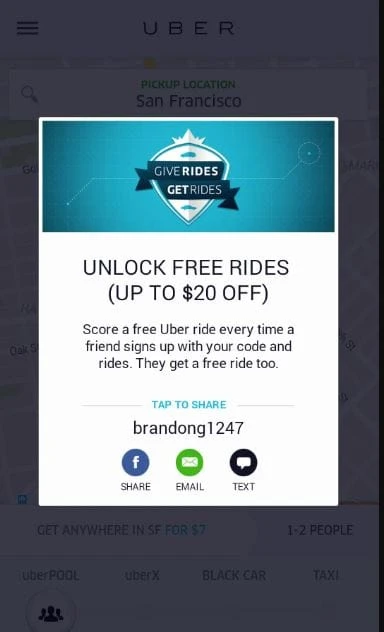
Referral Codes: Each user was provided with a unique referral code that they could easily share via social media, email, or even text. This personal touch not only facilitated the sharing process but made tracking the source of new users straightforward, allowing Uber to fine-tune its program continuously.

Seamless Integration Within the App: Uber’s app design played a crucial role in the referral program’s success. The referral option was prominently displayed, making it accessible within a few taps. This ease of use removed barriers to sharing, significantly increasing participation rates. The app also provided users with real-time updates on their rewards, adding a layer of instant gratification to the process.
By embedding these gamified elements into its referral program, Uber turned each user into a mini-marketer for the brand. This strategy was not just about growing the user base—it was about building a community that felt invested in the service. Uber’s approach demonstrates the power of integrating traditional marketing strategies with modern technology and user-centered design to drive business growth and customer loyalty. This holistic strategy allowed Uber to not just meet its initial objectives but to exceed them, paving the way for its expansion on a global scale.
Gamification Tactics Used by Uber
Dual-Sided Incentives
At the heart of Uber’s gamification strategy was the concept of dual-sided incentives—a win-win scenario for both the referrer and the referee. By offering free ride credits to both parties, Uber not only motivated existing users to share their positive experiences but also lowered the barrier for new users to try the service. This approach not only fueled Uber’s word-of-mouth advertising but also significantly amplified user acquisition rates.
The impact of these incentives on Uber’s growth is undeniable. Reports indicate that at its peak, Uber’s referral program contributed substantially to its user base expansion, with millions of first-time users trying the service thanks to a referral. The genius of Uber’s approach was in how it turned satisfied customers into active brand promoters, leveraging their network to drive exponential growth. This strategy capitalized on the natural human tendency to share something of value—especially when there is a reward involved.
Seamless Integration and Accessibility
Uber’s referral program’s success was also heavily dependent on its seamless integration into the mobile app’s user interface. The referral feature was designed to be as accessible as possible, often just a few taps away. This ease of use ensured that users could send invites without disrupting their experience or requiring them to exit the app.
Moreover, Uber’s mobile-first strategy was crucial in this integration. By optimizing the referral process for mobile use, Uber tapped into the growing trend of smartphone usage, making it convenient for users to engage with the referral program no matter where they were. This strategy was complemented by the use of push notifications and real-time updates about the rewards, which kept users engaged and informed about the benefits of participating in the referral program.
The simplicity and effectiveness of Uber’s app design not only enhanced user experience but also ensured that the referral process was a natural part of the user journey. This integration is a textbook example of how businesses can use app design to support marketing strategies and meet user expectations in the digital age.
In summary, Uber’s referral program exemplifies how gamification can transform marketing strategies. By creating a system that rewards both the referrer and the referee, Uber maximized participation and accelerated its growth. The integration of this system into a user-friendly mobile app made the referral process a seamless part of the Uber experience, further enhancing its effectiveness and user engagement.
Analyzing the Success of Uber’s Gamified Referrals
Impact on User Growth and Market Expansion
Uber’s referral program has been a cornerstone of its explosive growth, fundamentally changing how the company scaled across global markets. The program’s gamification aspects, particularly the dual-sided incentives, played a critical role in this expansion. According to various industry analyses, Uber’s innovative referral tactics contributed significantly to its user base, which saw the company reaching millions of users worldwide in a relatively short time. For instance, during its peak periods of expansion, referrals were instrumental in acquiring new users, with a substantial percentage of first-time riders introduced through personal referrals.
This strategic implementation not only boosted immediate user growth but also ensured sustained engagement. Gamification made the referral process exciting and rewarding, which kept existing users coming back and using the service more frequently. By turning the referral process into a game where everyone wins, Uber was able to maintain high levels of user activity and engagement long after the initial referral.
Lessons for Other Businesses
Uber’s success with gamified referrals offers invaluable lessons for other businesses aiming to leverage similar strategies. One key takeaway is the importance of simplicity and direct rewards in the referral process. Making it easy for users to share referrals and immediately see the benefits increases participation rates dramatically.
Moreover, the adaptability of gamification strategies across various industries highlights its versatility. Whether it’s a ride-sharing app, a financial service, or an e-commerce platform, the principles of rewarding user engagement and creating competitive, yet cooperative environments can significantly enhance customer acquisition and retention.
For companies looking to implement or revamp their referral programs, considering these elements can be crucial. Tailoring the gamification elements to match your industry’s unique demands and customer behaviors, just as Uber did with transport and mobility, will help replicate this success. Integrating technology to track and reward referrals effectively and ensuring that the program aligns with broader business goals are also essential steps towards creating a successful gamified referral system.
Expanding the Game: Applying Gamification to Referral Programs
As we’ve seen from Uber’s innovative approach, gamification can profoundly transform referral programs, turning ordinary customer interactions into dynamic, engaging experiences that drive growth and enhance user engagement. But how can other businesses leverage similar strategies to supercharge their referral programs? This section explores practical tactics and real-world examples to guide you in harnessing the power of gamification, ensuring your referral initiatives are as compelling as they are rewarding.
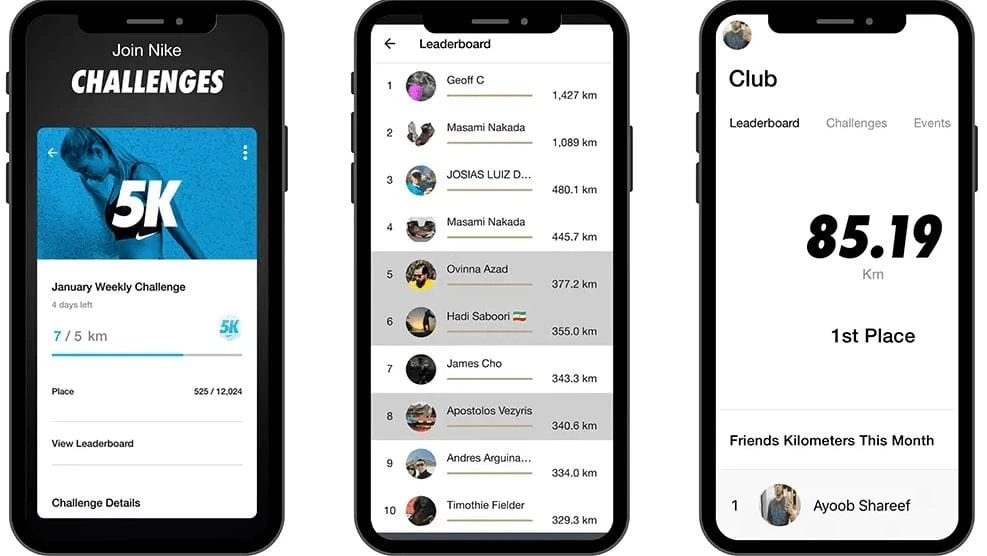
3.1 Strategic Implementation of Leaderboards
Creating Tiered Rewards: Elevating the referral process with tiered rewards encourages participants to climb higher on the referral leaderboard. This method incentivizes users to continuously engage by unlocking new benefits at each level.
A prime example is the Nike Run Club, which uses tiered rewards to motivate runners to achieve their running milestones, effectively making each goal more rewarding than the last.
3.2 Reward Systems and Incentivization
Time-Bound Challenges: Implementing limited-time challenges can significantly boost referral activity by creating a sense of urgency.
Starbucks’ ‘Star Dash’ is an exemplary model where customers are motivated to make more purchases within a short period to earn rewards. This approach not only increases immediate engagement but also boosts long-term customer loyalty.

3.3 Enhancing Visibility and Engagement
Social Proof and Recognition: Highlighting achievements on public platforms can significantly enhance participant motivation.
LinkedIn’s ‘Top Voices’ is a great example where top influencers are recognized publicly, encouraging them to engage more actively while also motivating others to aspire to similar recognition.

3.4 Personalization and Gamified Milestones
Personalized Goals: By setting referral targets that adapt to individual past performance, businesses can personalize challenges and enhance motivation.
Duolingo utilizes this strategy by setting personalized goals for users, making language learning more engaging and tailored to the learner’s pace and ability.

3.5 Feedback Loops and Progress Updates
Real-Time Feedback: Keeping participants informed about their status in real time can drive continuous engagement and improvement.
Uber excels in this area by providing drivers real-time feedback on surge pricing and hotspot locations, helping them make strategic decisions about where to drive and when.
Leveraging Gamification in Referral Programs Across Diverse Industries
it’s clear that this strategy isn’t confined to just one type of business. Virtually any industry can harness the power of gamification to revitalize their referral programs, turning everyday transactions into engaging, game-like experiences that customers love to participate in.
Ideal Industries for Gamification in Referral Programs:
- E-commerce and Retail: These sectors can greatly benefit from gamified referrals by encouraging repeat purchases and increasing brand loyalty through fun, competitive challenges and rewards.
- Technology and Software: For tech companies, gamification can drive software adoption and user retention by making the referral process a part of the user’s daily digital interaction.
- Finance and Banking: In an industry where trust and continuous engagement are key, gamification can encourage users to utilize more services through tiered rewards and achievements.
- Health and Fitness: This industry can use gamification to encourage healthy behaviors and regular facility use, with rewards for meeting personal fitness goals or gym check-ins.
- Education and Training: Educational platforms can implement gamification to boost course completion rates and encourage students to engage with more content by rewarding them for milestones achieved.
These examples show that the scope for incorporating gamification into referral programs is vast and varied. By understanding the unique dynamics and customer behaviors of each sector, companies can design gamified referral strategies that not only engage but also resonate deeply with their target audience.
Best Practices in Gamifying Referral Programs
Creating Engaging and Rewarding Referral Programs
To design a referral program that captivates and retains interest, simplicity and clarity are key. Consider these tips:
- Simplify the Process: Ensure the referral mechanism is straightforward enough for all users to understand and engage with easily.
- Visual Engagement: Use progress bars and visual cues that allow users to see their achievements and rewards in real-time.
- Immediate Rewards: Offer instant gratification for referrals, which can boost enthusiasm and encourage continuous participation.
- Leverage Analytics: Employ tracking and analytics to:
- Understand user behavior and preferences.
- Tailor the program to enhance user satisfaction.
- Adjust game mechanics based on performance data to maximize engagement.
Avoiding Common Pitfalls in Referral Gamification
While gamifying your referral program can be highly effective, it’s important to steer clear of common traps:
Avoid Overcomplication: Keep game mechanics simple. Users should instantly grasp how the system works and what they need to do to earn rewards.
Balance Effort and Reward:
- Ensure that the rewards justify the efforts. Over-demanding tasks can demotivate users.
- Provide rewards that are both appealing and achievable without excessive requirements.
Prevent Exploitation:
- Design a robust system that discourages gaming or manipulation of the rules.
- Monitor for unusual activities that may indicate abuse of the system and adjust protocols accordingly.
By focusing on these areas, businesses can develop referral programs that not only draw in users but also promote sustained engagement and loyalty. Remember, the essence of effective gamification is making participation rewarding and enjoyable, turning everyday users into active and enthusiastic promoters of your brand.
Conclusion
As we wrap up our discussion on how Uber used gamification in their referral program, it’s clear that turning marketing strategies into engaging activities can make a big difference. Uber’s approach, with rewards for both the person referring and the new user, easy sharing options, and a straightforward app design, shows how effective this can be.
If you’re thinking about boosting your business, why not consider gamification for your own referral programs? It could make sharing your services a fun and rewarding experience for your customers.
Looking ahead, the way we market and engage customers is always changing. Gamification is becoming more important in helping businesses connect with their customers in enjoyable ways. By adopting some of these innovative tactics, your business could see new growth, just like Uber did.
Checkout how top Instacart company like Uber grew its business 2x by using referral programs