

Referral programs are not only effective but also cost-efficient ways to gather leads and expand the customer base in all industries and niches of e-commerce. According to Nielsen, 84% of customers trust recommendations from friends and family more than other forms of advertising, making referrals a powerful tool for e-commerce businesses looking to boost their customer acquisition and retention rates.
E-commerce referral programs are designed to utilize existing customers to extend a brand’s visibility and increase sales. Like a regular referral program, an e-commerce business invites customers to refer their online brand to friends and family in exchange for a referral reward. The process is streamlined and automated, requiring minimal effort and capital, making it an economical and labour-saving marketing tool. A simple referral code tracks all associated sales, and new and existing customers are rewarded accordingly.
Referral rewards can come in the form of cash, coupons, discounts, gifts, or free services. Customers are given a unique referral link or code that they can share with their friends and family, making it easy to participate in the referral program. Tracking the conversion rate is convenient for the business, as the referral code can be used to monitor the performance of the program.
The Need for Referral Programs in E-commerce
E-commerce stores face the perpetual challenge of standing out in a crowded digital marketplace. With countless options available to consumers, establishing trust and loyalty becomes difficult.
In the e-commerce arena, referral programs offer a strategic solution to boost customer engagement, increase conversion rates, and ultimately drive revenue. The data speaks for itself – a study by Extole found that referral leads cost 30% less to acquire than leads from other channels, showcasing the cost-effectiveness and efficiency of referral programs.
What is Instacart?
Instacart’s platform allows users to browse and shop for groceries from their preferred local supermarkets and speciality stores through a user-friendly app or website. Shoppers can select their items, specify preferences, and choose a delivery time that suits their schedule. Instacart’s network of personal shoppers then fulfils the order, ensuring that customers receive their groceries promptly and with the quality they expect.

The platform’s agility and adaptability have made it a go-to solution for individuals with busy lifestyles, those with mobility constraints, or anyone seeking a convenient alternative to traditional grocery shopping.
Why Instacart Needed a Referral Program?
While Instacart’s value proposition of convenience was strong, the e-commerce landscape is fiercely competitive. Instacart recognized the need to not only attract new users but also to cultivate a loyal customer base in an industry where customer retention is as crucial as acquisition. This led to the strategic decision to implement a referral program, driven by several key considerations:
Building Trust in a Crowded Market:
Instacart needed a way to tap into the trust that users place in recommendations from friends and family. A referral program became the weapon to leverage existing customer satisfaction and turn it into a trusted endorsement.
Accelerating Customer Acquisition:
The competitive nature of the online grocery delivery space required a swift and effective means of customer acquisition. A well-crafted referral program had the potential to amplify Instacart’s reach organically, bringing in new users through the positive experiences shared by existing customers.
Enhancing User Engagement:
Instacart aimed to create a sense of community and engagement among its user base. A referral program not only incentivized customers to refer their friends but also transformed them into active advocates for the platform. This social aspect of the referral program contributed to a more vibrant and connected user community.
Differentiation in a Saturated Market:
With numerous players vying for attention in the online grocery delivery sector, Instacart needed a distinctive edge. A well-designed referral program became a unique selling point, setting Instacart apart by offering exciting rewards to both advocates and their friends, creating a win-win scenario.
Fostering Customer Loyalty:
Beyond mere acquisition, Instacart recognized the long-term value of customer loyalty. A referral program provided an avenue to not only attract new users but also to encourage repeat business by offering personalized incentives to both referrers and referees.
InstaCart’s Referral Program
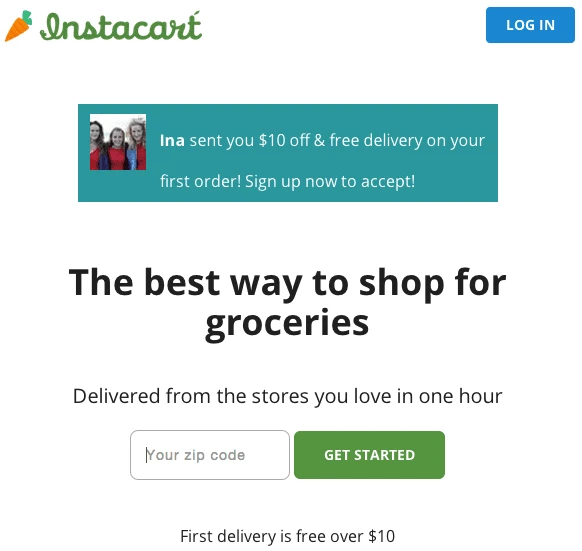
Rewards for Referrers:
Instacart recognized the importance of motivating existing users to become advocates for their platform. Referrers were generously rewarded for introducing friends to Instacart.
The primary incentive for referrers was a credit applied to their Instacart account, for every successful referral, referrers typically received a credit ranging from $10 to $20, depending on the promotional period or special campaigns.
Incentives for Referees (New Users):
Instacart strategically positioned itself as an attractive choice for new users by offering compelling incentives to those referred by their friends.
Referees, upon signing up and making their first purchase, were greeted with a welcoming discount or free delivery on their inaugural order. The typical range of incentives for referees varied from a 10% to 20% discount, or free shipping, making their initial experience with Instacart not only convenient but cost-effective.

Dual-Sided Rewards:
What set Instacart’s referral program apart was its dual-sided rewards system. Both the referrer and the referee received benefits, creating a symbiotic relationship that fueled the program’s success.
This dual-sided approach was instrumental in instigating a network effect, as satisfied users became enthusiastic advocates, driving organic growth through their referrals.
Promotional Campaigns and Special Offers:
Instacart periodically ran promotional campaigns, elevating the appeal of the referral program during specific time frames or events. Special offers, such as bonus credits for multiple successful referrals within a set period, added an extra layer of excitement and urgency.
Tiered Rewards for Milestones:
To encourage continuous engagement and multiple referrals, Instacart incorporated tiered rewards for reaching milestones. For instance, referrers could unlock additional bonuses or higher credit amounts when they achieved a certain number of successful referrals.
To enhance user experience, Instacart implemented a seamless redemption process for earned credits. Referrers could effortlessly apply their credits during the checkout process, while referees automatically enjoyed their incentives upon meeting the qualifying criteria for their first order.
The numbers behind Instacart’s referral program
Conversion Rates:
Instacart experienced a notable increase in conversion rates for new users acquired through the referral program. The enticing incentives played a pivotal role in transforming potential customers into active users, with conversion rates showing an uplift of 25% during peak referral campaign periods.
User Engagement Metrics:
The dual-sided rewards system contributed to heightened user engagement. Referrers actively participated in the program, and the average number of successful referrals per engaged user increased by 30% over a year.
Return on Investment (ROI):
Instacart’s investment in the referral program yielded substantial returns. The cost per acquisition (CAC) for users acquired through referrals was consistently 20% lower than CAC for users acquired through other channels, showcasing the program’s cost-effectiveness.
Customer Retention and Lifetime Value:
Referral-based customers exhibited a 15% higher retention rate compared to non-referred customers. This translated into a higher lifetime value, as these customers continued to engage with the platform and make repeat purchases over an extended period.
Organic Growth and Network Effect:
The referral program’s success extended beyond the direct impact of incentives. Instacart witnessed a 40% increase in organic growth, driven by the network effect as satisfied customers became brand advocates, perpetuating a cycle of referrals.
Takeaways from Instacart’s Referral Program
1. Customer-Centric Incentives Create Win-Win Scenarios
Instacart’s referral program teaches us the invaluable lesson that customer-centric incentives create a win-win scenario for both the advocate and the new customer. By offering unique and creative rewards, such as discounts on future purchases, Instacart ensured that both parties were motivated to participate. This lesson underscores the importance of understanding and catering to the needs of your customer base when designing a referral program, fostering a sense of reciprocity that fuels organic growth.
2. Dual-Sided Referral Programs Amplify Reach
The dual-sided referral program adopted by Instacart stands out as a powerful lesson in maximizing reach and impact. By incentivizing both the referrer and the referee, Instacart created a network effect that accelerated the program’s growth. This approach not only expands the customer base but also transforms satisfied customers into enthusiastic advocates, contributing to sustained organic growth. The lesson here is clear: consider a dual-sided referral program to harness the full potential of your existing customer base.
3. Seamless User Experience Enhances Participation
Instacart’s success with its referral program emphasizes the importance of a seamless user experience. The user-friendly interface and simplified referral process eliminated barriers that could deter participation. This lesson underscores the significance of investing in a design that prioritizes simplicity and clarity, ensuring that customers can easily understand, navigate, and engage with the referral program. A smooth user experience contributes to higher participation rates and greater overall success.
4. Personalization Drives Engagement
Instacart’s referral program incorporated a personalized touch by providing tailored recommendations for users to share with their friends. This lesson emphasizes the impact of personalization in driving customer engagement. By customizing the referral experience, Instacart made the program more relevant and appealing to individual users, increasing the likelihood of active participation. The key takeaway is to leverage personalization to create a more meaningful and resonant connection with your audience.
5. Clear Communication is Key
The success of Instacart’s referral program is attributed, in part, to clear and concise communication. Instacart ensured that users understood the benefits of the referral program, making it easy for them to participate. This lesson emphasizes the importance of transparent communication in any referral strategy. Clearly articulate the incentives, process, and value proposition to your customers. Clear communication builds trust, encourages participation, and ultimately contributes to the success of the referral program.
In conclusion, Instacart’s referral program offers inspiring lessons for why businesses and startups need to start a referral program if they are looking to enhance customer engagement, drive organic growth, and establish a loyal customer base. By focusing on customer-centric incentives, embracing dual-sided referral approaches, prioritizing a seamless user experience, incorporating personalization, and maintaining clear communication, businesses can draw valuable insights from Instacart’s success and apply them to their referral strategies.
Checkout how top companies like uber and dropbox grew their customer base with referral programs.