


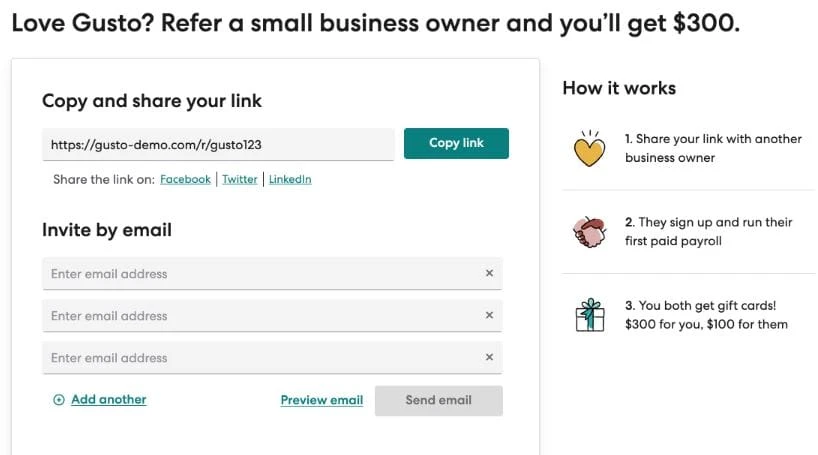
Imagine if there was a way to supercharge your B2B business growth right from the early stages. Consider how Gusto, a full-service HR platform, leveraged referral marketing to achieve remarkable success. Gusto’s program offers a $300 gift card for every referral who signs up and runs their first payroll, with the referee receiving a $100 gift card. This dual-sided incentive structure has driven significant user engagement and rapid growth for the company.
In today’s digital world, where trust and personal recommendations reign supreme, referral marketing stands out as a highly effective strategy for growth. For early-stage B2B companies, the challenges are unique and often daunting. Limited marketing budgets, the struggle to establish credibility, and the need to generate high-quality leads are just a few hurdles these companies face. Referral marketing offers a solution by turning satisfied customers and professional networks into powerful advocates.
This blog aims to provide a comprehensive guide on how early-stage B2B companies can leverage referral marketing to overcome these challenges and drive significant growth. Whether you’re just launching your product or looking to build a robust customer base, understanding and implementing an effective referral marketing strategy can be a game-changer.
Let’s dive in …
2. Overview of B2B Referral Marketing Programs for Companies at Their Early Stages
Referral marketing is a strategy where businesses encourage their existing customers to refer new customers by offering incentives. This approach leverages the trust and personal connections of satisfied customers to attract high-quality leads. In the context of B2B (business-to-business) referral marketing, the process involves businesses referring to other businesses, rather than individual consumers.
Differences Between B2B and B2C Referral Marketing:
While B2C (business-to-consumer) referral marketing often focuses on individual customers and relatively straightforward rewards like discounts or freebies, B2B referral marketing is more complex. B2B transactions typically involve higher stakes, longer sales cycles, and more decision-makers. Therefore, B2B referral programs often include incentives that appeal to business needs, such as service discounts, extended trial periods, or cash rewards.
By understanding and implementing an effective B2B referral marketing strategy, early-stage companies can utilise these benefits to fuel their growth and establish a strong market presence.
3. Challenges Early Stage B2B Companies Face
Starting a B2B company is no easy feat, especially when resources are limited and the market is highly competitive. Early-stage B2B companies often encounter several specific challenges that can hinder their growth.
Limited Marketing Budgets and Resources:
One of the most significant hurdles is operating with a limited marketing budget. Unlike established companies with substantial marketing funds, early-stage businesses must be strategic and efficient with their spending. This constraint makes it difficult to implement large-scale marketing campaigns or invest in high-cost advertising channels. Every dollar needs to be stretched to maximize impact, which often means relying on cost-effective methods like referral marketing.
Difficulty in Establishing Trust and Credibility:
In the B2B space, trust and credibility are paramount. Businesses are cautious about who they partner with, often requiring proof of reliability and value before making commitments. For new companies, establishing this trust can be particularly challenging. They lack a track record and customer testimonials that more established businesses have. This credibility gap can make it hard to attract new clients and close deals.
Challenges in Acquiring High-Quality Leads:
Generating high-quality leads is another significant challenge. Early-stage companies may not have an extensive network or the brand recognition needed to attract potential clients. Without a steady stream of qualified leads, sales pipelines can dry up quickly, stalling growth and making it hard to sustain momentum. Traditional lead generation methods like cold calling and email marketing can be time-consuming and often yield low conversion rates.
Importance of Word-of-Mouth and Trusted Recommendations:
In the B2B world, word-of-mouth and trusted recommendations are incredibly powerful. Interestingly, More than 90% of people trust recommendations from friends and family over any other type of advertising. This trust is even more critical in B2B transactions, where the stakes are higher and decisions are more complex. Early-stage companies can leverage this by focusing on referral marketing to build credibility and attract high-quality leads through trusted networks.
By understanding these challenges and strategically addressing them, early-stage B2B companies can better navigate the competitive landscape. Referral marketing stands out as a valuable tool to overcome these obstacles, offering a cost-effective way to build trust, generate high-quality leads, and ultimately drive growth.
4. Why Companies Should Consider Referral Programs for Driving Their Business Growth
Looking at today’s B2B market, It is characterised by informed buyers who trust peer recommendations and third-party validations more than traditional advertisements.A report by Edelman reveals that 84% of B2B decision-makers start the buying process with a referral. This shows the increasing reliance on word-of-mouth and peer endorsements in B2B transactions.
With marketing budgets often limited, especially for early-stage companies, there is a noticeable shift towards more cost-effective and high-impact marketing strategies. Referral marketing fits this need perfectly, leveraging the existing customer base to generate new leads at a fraction of the cost of traditional marketing methods.
How Referral Marketing Addresses the Challenges
Referral marketing addresses several key challenges faced by early-stage B2B companies:
Establishing Trust and Credibility: One of the most significant hurdles for early-stage B2B companies is establishing trust and credibility in a competitive market. Referrals come from trusted sources—friends, colleagues, or business partners—who have direct experience with the product or service. This endorsement significantly boosts the credibility of the referred business, making it easier for potential customers to trust and engage with them. As a result, referred leads are more likely to convert, providing a strong foundation for building long-term business relationships.
Maximizing Marketing Budgets: Early-stage companies often operate with limited marketing budgets, making it crucial to maximize the return on investment (ROI) for every marketing dollar spent. Referral marketing is highly cost-effective because it relies on leveraging existing customer relationships rather than investing in expensive advertising campaigns. By incentivizing current customers to refer others, companies can generate new leads without the high costs associated with traditional marketing methods. This approach not only reduces acquisition costs but also improves the overall efficiency of the marketing spend.
Generating High-Quality Leads: Generating high-quality leads is another critical challenge for early-stage B2B companies. Traditional lead generation methods like cold calling and email marketing can be time-consuming and often yield low conversion rates. In contrast, referred leads tend to be of higher quality because they come from trusted sources who understand both the product and the potential needs of the referee. This pre-qualification process ensures that referred leads are more likely to be interested in the product and ready to make a purchase, resulting in higher conversion rates and shorter sales cycles.
Benefits of Leveraging Referral Marketing
The benefits of implementing a referral marketing program are manifold:
- Boosting Conversion Rates: Referred leads typically exhibit higher conversion rates compared to leads generated through other channels. This is because they come with a recommendation from someone they trust, which reduces the perceived risk and increases the likelihood of a positive decision. According to the Wharton School of Business, referred customers are 18% more likely to stay with the company long-term.
- Enhancing Cost-Effectiveness: Referral marketing is one of the most cost-effective ways to acquire new customers. It leverages existing customer relationships, reducing the need for extensive marketing spend on traditional advertising. This efficiency is particularly beneficial for early-stage companies with limited budgets, allowing them to grow sustainably without overextending their resources.
- Achieving Rapid Growth: By tapping into the networks of existing customers, businesses can achieve rapid growth. The viral nature of referrals can lead to exponential increases in customer acquisition. Each satisfied customer becomes a potential advocate, spreading the word and attracting new clients. This organic growth mechanism can significantly amplify the reach and impact of marketing efforts, driving faster and more sustainable expansion.
- Scalability and Flexibility: Referral programs can easily be scaled as the business grows. Starting with a simple program and expanding it over time allows companies to adapt and optimize based on performance and feedback. As the customer base grows, the pool of potential referrers increases, creating a self-sustaining growth cycle that can support long-term success.
Referral marketing offers a potent solution for early-stage B2B companies looking to overcome common challenges and drive growth. As businesses continue to navigate the competitive B2B landscape, leveraging the power of referral marketing can provide a significant edge and pave the way for sustainable growth.
5. Key Considerations Before Starting a B2B Referral Program
Before starting a referral program, there are several critical factors to consider. From setting clear objectives to choosing the right incentives, every aspect needs careful planning. Here are the key considerations to keep in mind:
Setting Clear Objectives and Defining Goals
Before launching a referral program, set clear objectives and define specific goals. Are you aiming to increase your customer base, boost sales, or enhance customer engagement? Clearly defined goals help in measuring success and providing strategic direction. For instance, if your goal is to increase customer acquisition, focus on the number of new customers referred each month. Setting SMART (Specific, Measurable, Achievable, Relevant, Time-bound) goals ensures targeted and trackable efforts.
Identifying the Target Audience and Understanding Their Needs
Understanding your target audience is crucial for the success of your referral program. Who are your potential customers, and what are their pain points? Conduct market research to gather insights into their preferences and behaviors. Tailoring the referral program to your audience’s interests increases participation. For example, if targeting small business owners, offer incentives that appeal to their need for cost-effective solutions or business growth.
Choosing the Right Incentives to Motivate Referrers and Referees
Incentives play a significant role in motivating participants in a referral program. Common incentives include discounts, free products or services, cash rewards, or exclusive access to new features. In the B2B sector, cash rewards often perform better as they provide immediate and tangible value. Offer something valuable to both the referrer and the referee. Ensure the incentives are achievable and clearly communicated to avoid confusion.
Ensuring a Simple and User-Friendly Referral Process
A complicated referral process can deter participation, so keep it simple and user-friendly. The easier it is for customers to refer others, the more likely they are to do so. Provide clear instructions and multiple referral options, such as sharing via email, social media, or personalized referral links. Automating parts of the process using referral marketing software can streamline the experience.
Implementing Tracking Mechanisms to Monitor the Program’s Success
Effective tracking mechanisms are critical for understanding the performance of your referral program. Use referral marketing software to monitor key metrics like the number of referrals, conversion rates, and the overall ROI of the program. This data helps identify what works and what doesn’t, allowing you to make informed adjustments. Regularly review program performance and gather participant feedback to continuously improve the process.
By setting clear objectives, understanding your audience, choosing the right incentives, simplifying the referral process, and implementing effective tracking mechanisms, you can create a referral program that drives growth and builds strong customer relationships.
6. How to Drive Growth Using Referral Marketing
Driving growth through referral marketing involves several strategic steps that leverage your existing resources and networks. By carefully crafting each element of your referral program, you can maximize its effectiveness and drive significant business growth. Here’s how to get started:
Leveraging Existing Networks
Utilizing personal and professional networks is a powerful way to kickstart your referral program. Begin by reaching out to your current customers, business partners, and professional contacts. These individuals already know and trust your business, making them excellent advocates.
- Personal Networks: Encourage your employees to share the referral program with their friends and family. Personal endorsements can be very compelling.
- Professional Networks: Leverage LinkedIn and other professional networks to spread the word. Ask satisfied customers to refer their peers in the industry. Use personalized messages to make your requests more sincere and effective.
Create Compelling Incentives
Offering attractive rewards is key to motivating both referrers and referees. The right incentives can vary depending on your audience and business model.
- Cash Rewards: In the B2B sector, cash rewards often perform better as they provide immediate and tangible value. Consider offering a fixed amount for each successful referral.
Example : Gusto offers a $300 gift card for each referral who signs up and runs their first payroll, with the referee receiving a $100 gift card.
- Discounts and Free Services: Offer discounts on future purchases or free access to premium services. This can be particularly appealing to businesses looking to save on costs.
Example : DigitalOcean offers $25 credits for each referral and $200 credits to the referred person, enhancing the program’s appeal.

- Exclusive Access: Provide early access to new features or exclusive content as a reward. This not only incentivizes referrals but also makes the referrers feel valued.
Example: Dropbox provides additional storage space as an incentive, which directly benefits users and encourages them to refer others.

Building Strategic Partnerships
Strategic partnerships can significantly enhance the reach of your referral program. Identify potential partners who have access to your target audience.
- Complementary Businesses: Partner with businesses that offer complementary products or services. For example, a software company might partner with an IT consulting firm.
- Industry Influencers: Engage with industry influencers who can promote your referral program to their followers. Their endorsement can add significant credibility.
Develop High-Quality Shareable Content
Creating high-quality, shareable content is crucial for spreading the word about your referral program. This content should highlight the benefits of your product and be easy to share.
- Case Studies and Testimonials: Share success stories from existing customers. Real-world examples of how your product or service has helped other businesses can be very persuasive.
- Infographics and Videos: Use visual content to explain how your referral program works and the benefits of participating. Infographics and videos are particularly effective as they are easy to consume and share.
- Blog Posts and Articles: Write informative blog posts about the benefits of your referral program. Include tips and best practices for maximizing the rewards.
Implement a User-Friendly Referral Mechanism
Choosing the right referral marketing software or tool is essential to simplify and automate the referral process.
- Referral Software: Tools like Referral Rocket can automate the tracking and rewarding of referrals. These platforms often include features like automated emails, customizable referral links, and detailed analytics.
- CRM Integration: Ensure your referral program integrates seamlessly with your CRM system. This allows you to track referrals and customer interactions efficiently.
Promote the Referral Program
Effective promotion is key to the success of your referral program. Use a multi-channel approach to reach your audience.
- Email Marketing: Send regular emails to your customers and prospects about the referral program. Include clear calls-to-action and highlight the rewards.
- Social Media: Use your social media platforms to promote the program. Share engaging content and encourage your followers to participate.
- Website : Feature the referral program prominently on your website and blog. Use banners, pop-ups, and dedicated landing pages to attract attention.
Monitor and Optimize
Regularly tracking performance metrics and making necessary adjustments is crucial to improving your referral program.
- Key Metrics: Monitor metrics such as the number of referrals, conversion rates, and the overall ROI. This data helps identify what works and what doesn’t.
- Feedback and Adjustments: Gather feedback from participants to understand their experience. Use this feedback to make necessary adjustments and improvements.
- Continuous Improvement: Referral programs are not set-and-forget. Continuously optimize based on data and feedback to ensure ongoing success.
By leveraging existing networks, offering compelling incentives, building strategic partnerships, creating high-quality shareable content, implementing a user-friendly referral mechanism, promoting the program effectively, and regularly monitoring and optimizing, you can drive significant growth using referral marketing.
This strategic approach ensures that your referral program is not only successful but also sustainable in the long term. Checkout top b2b referral programs in the b2b industry.
7. Best Practices and Tips
Implementing a successful B2B referral program requires strategic planning and continuous optimization. Here are some best practices and tips to ensure your referral program is effective and engaging:
Understand Your Audience
To tailor your referral program to the interests and preferences of your target audience, it’s crucial to understand who they are and what motivates them. Start by analyzing your existing customer base:
- Market Research: Conduct surveys and interviews to gather insights into your customers’ needs, preferences, and pain points. Understand what rewards they find most appealing and what would encourage them to refer others.
- Customer Segmentation: Segment your audience based on factors like industry, company size, and job roles. This helps in creating personalized incentives that resonate with different segments of your customer base.
- Behavioral Analysis: Use analytics tools to track customer behavior on your website and social media platforms. Identify patterns and trends that can inform your referral strategies.
Leveraging Technologies
Utilizing referral marketing software can streamline the tracking and management of your program, making it more efficient and effective. Referral Rocket is an ideal choice for B2B businesses, offering comprehensive features to support your referral initiatives:
- Automation: Referral Rocket automates the process of tracking referrals, sending out rewards, and following up with participants. This reduces manual workload and ensures a smooth experience for users.
- Customization: The platform allows you to customize referral links, emails, and landing pages, ensuring that your branding is consistent and professional.
- Analytics: With robust analytics tools, you can monitor the performance of your referral program in real-time. Track key metrics such as the number of referrals, conversion rates, and ROI to make data-driven decisions.
Offering Tiered Rewards
Implementing a tiered reward structure can significantly boost participation in your referral program. Here’s why you should consider it:
- Increased Motivation: Tiered rewards provide escalating incentives, motivating participants to refer more people. For example, offer a small reward for the first referral, a larger reward for the fifth, and a substantial prize for the tenth.
- Engagement: A multi-step reward system keeps participants engaged over a longer period. They are more likely to continue referring others to reach the next reward tier.
A great example of a tiered referral program is “Morning Brew,” a popular newsletter. They reward users with free items based on the number of referrals, offering escalating incentives to motivate continuous engagement and increase their subscriber base.

Regularly Optimizing
Continuous improvement is key to maintaining the effectiveness of your referral program. Regularly analyze data and gather feedback to refine and enhance your strategies:
- Monitor Metrics: Track metrics such as referral rates, conversion rates, and customer acquisition costs. Identify which aspects of your program are performing well and which need improvement.
- Gather Feedback: Solicit feedback from participants to understand their experience and identify any pain points. Use surveys, interviews, and direct communication to gather valuable insights.
- A/B Testing: Conduct A/B tests on different elements of your referral program, such as email subject lines, reward structures, and landing page designs. This helps in determining what resonates best with your audience and optimizing accordingly.
- Adjust Incentives: Based on feedback and performance data, adjust your incentives to ensure they remain attractive and motivating. Keep an eye on industry trends and competitor programs to stay ahead of the curve.
By following these best practices and tips, you can create a referral program that drives significant growth for your B2B business. Implementing a well-structured and continuously refined referral program will not only enhance customer acquisition but also build strong, long-lasting relationships with your clients.
8. Final Thoughts on Boosting Growth with Referral Marketing
Referral marketing is a powerful tool for driving growth in early-stage B2B companies. By leveraging existing networks, offering compelling incentives, building strategic partnerships, creating shareable content, implementing user-friendly mechanisms, promoting effectively, and continuously optimizing, businesses can achieve significant growth.
The benefits are clear: higher conversion rates, cost-effectiveness, rapid growth, and scalability. Now is the time to harness the power of referral marketing. Start implementing your referral program today to unlock new growth opportunities.
Ready to take the next step?
Explore Referral Rocket’s solutions and see how we can help you create an effective referral marketing program. Let’s drive your business growth together!